The month is over. The month has ended.
Check the bank account of the restaurant.
You didn’t get the number you had hoped for.
This disconnect can be frustrating for restaurant owners as they believe that profit and cash availability should tell the same tale. But they don’t. A P&L measures the financial performance of a business over a specific time period, whereas it is a bank account that shows the exact timing of money going into and out of the business.
Knowing the differences can allow owners to change their perspective on restaurant finances.
Check out what happens during a normal week. The customers pay for food. Paying employees is necessary. Food and beverages are delivered with invoices attached. Rent is getting closer. The credit card deposit is also timed. Taxes on sales have been collected, however that money comes with an obligation.
The shopping for the week ahead has already begun.
When you concentrate on revenues and the numbers at the end of profits it’s easy to miss a lots of activities.
The key may lie in prime cost
Food, drink and labour cost are all worth a close review when the profitability of a restaurant begins to decrease.
Cost of goods sold combined with labor is the main cost. The Bookkeeping Chefs’ instructions place the main cost between 60% and 65% of revenues for many establishments. They also emphasize the importance of weekly monitoring rather than waiting until the month ends.
Effective prime cost management is less about obsessing over a single percentage and more about noticing movement early.
Imagine that the restaurant’s performance usually within the range of its goals However, this past week, it went up. Maybe overtime is up. Perhaps, the costs for beverages remained constant however food prices soared. A higher proportion of food could prompt the manager to look at purchases, waste management, portions and menu mix, or vendor costs.
The percentage is the key. It is in the underlying activity in the restaurant.
Weekly reports allow for this conversation to be held even though everyone is aware of what has happened.
The details will be more difficult for you to recall after a couple of days.
The Vendor Bills are then delivered.
Restaurants may purchase ingredients one week and make payments the following week. This is the reason that understanding profit alone isn’t the answer to every cash-related question.
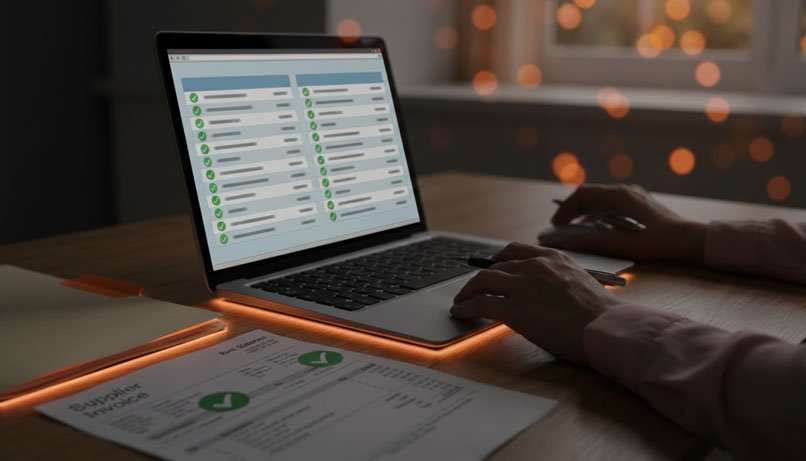
Invoices from vendors must be accounted for, tracked and paid. In the course of manual processing, a busy business with many suppliers can become a huge administrative burden.
Automating accounts payable can help organize this process by reducing repetitive handling of bills and payment information. Bookkeeping systems that are connected will give the owners a clear image of their obligations even though they haven’t yet been paid.
This is important since the bank’s balance as an individual can appear more healthy than the restaurant’s actual short-term position.
It might be that you have $80,000 in your account as of right now. It could mean something different if payroll, rent vendors, or other obligations will consume a large portion of it over the next few days.
This is what leads to cash flow forecasting.
The better question to ask is “What will happen to our funds after we have received the funds and have met our obligations we’ve made?”
It is crucial to understand the difference when deciding if this week is an ideal opportunity to replace equipment, buy more items or save the cash flow.
The Money You Received Could Not be Yours
The example of sales tax is a good one.
Restaurants take money from their customers, which they deal with in accordance with their tax obligations. If these funds are placed in the same category as operating money, the bank’s balance could create a false impression of what’s there to be spent.
Consistent record keeping helps restaurants comply with sales tax laws as well as providing a complete picture of their financial situation.
This is one reason why restaurant accounting can be more effective when financial responsibilities aren’t considered as distinct islands.
Prime cost affects margin. COGS and future payments are affected by purchases made by vendors. Cash and labor percentage are affected by the payroll. Cash flow is affected by sales tax. The P&L documents financial performance forecasting can help management look ahead.
The pieces connect.
Bookkeeping Chef uses restaurant-focused reporting as well as system integrations to bring those pieces together. Outsourced bookkeeping is a great option for owners who do not wish to spend the night manually reconciling their financial information.
The last point is vital.
Restaurant owners should never stop studying the literature regardless of whether they’re being handled by another. It’s important that the owners have access to information so that they know the situation.
So if the P&L says the restaurant made money, but the bank account feels surprisingly unbalanced, don’t think that any of the numbers can be incorrect.
Find out what transpired between you and your partner.
The answer to this question will tell you more about the restaurant, more than just a number.