Industries today are going through the era of speed as well as flexibility and efficiency are not just a matter of choice, they are now essential. Traditional infrastructure, usually expensive and slow to evolve, struggles to meet the growing demand for real-time analysis and distributed operations. ScalerPi provides a new approach on the subject by combining edge-computing with the practical aspects of engineering. This enables solutions that scale.
The Raspberry Pi is at the heart of this revolution that allows organizations to reconsider their methods of building and managing systems. Instead of being dependent on large, centralized hardware, businesses can now use lightweight, yet powerful devices that operate directly in the place where data is generated. This reduces time to market and allows teams the ability to react quickly to changing conditions.
Data for Action at the Edge
The true benefit of edge computing is its ability to perform data processing locally. In many industrial environments it’s not feasible to just wait for cloud systems to respond. ScalerPi solves this problem with an infrastructure that is able to work on its own while being able to connect with larger systems when required.
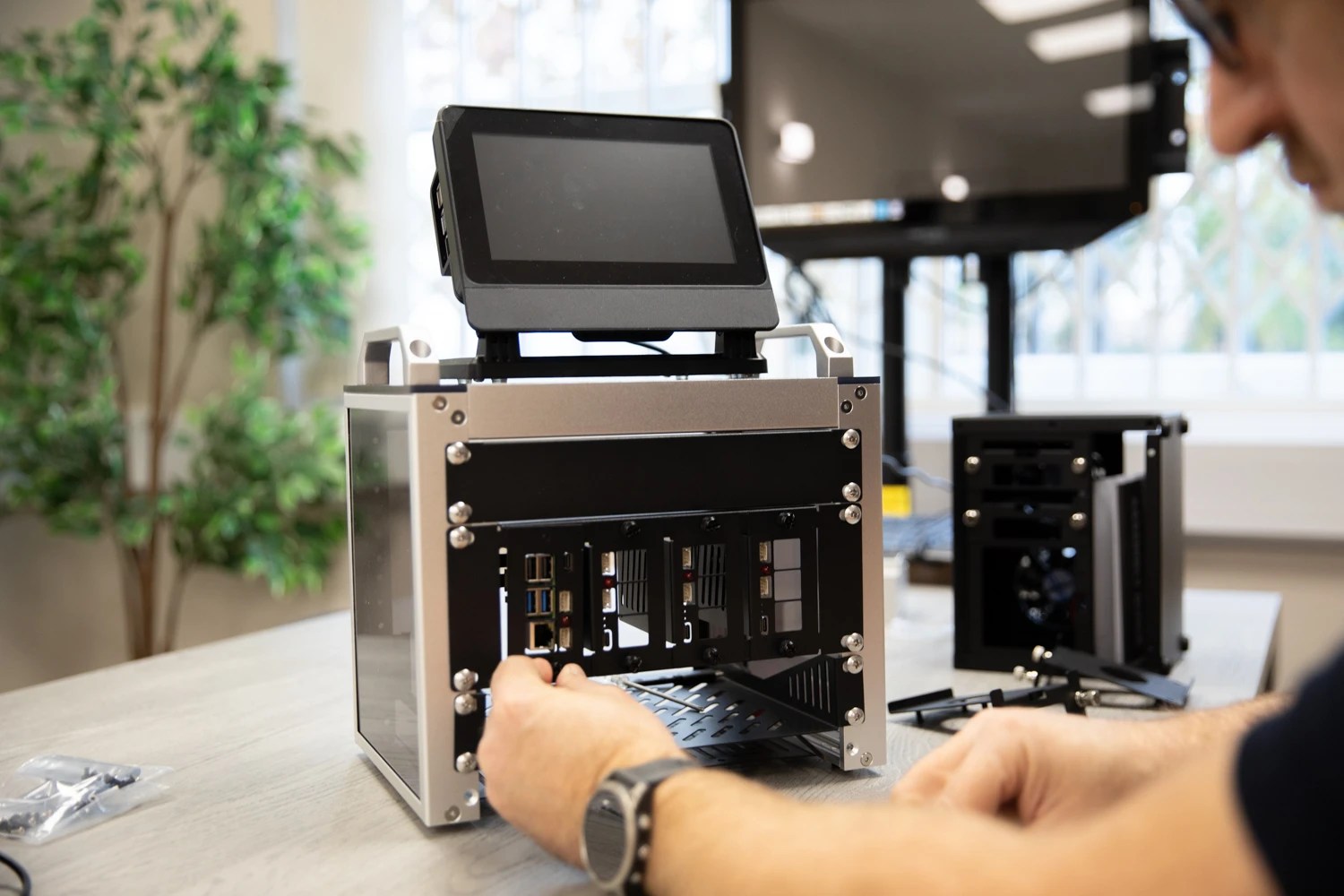
An essential component of this system is the industrial Raspberry Pi IoT gateway, which acts as the central connection point between devices and applications. It allows seamless communication among sensors, software and machinery platforms. This allows for real-time monitoring of operations and early detection of problems, and consistent performance across different sites.
This ability can be transformative for businesses such as logistics and environmental monitoring. Systems can operate even in areas that have low connectivity or remote locations to ensure that data and operations remain available.
Compact Power for Demanding Environments
One of the biggest challenges in industrial computing is balancing performance with practicality. Large servers may offer the power, but they typically cost a lot as well as energy consumption and the inability to change. ScalerPi offers industrial Raspberry Pi servers which deliver solid computing and a compact and energy efficient design.
They are specifically designed to work in real-world settings where space and power are at a minimum. They are suitable for use in a retail or factory outlet, or as a remote monitoring station. They are modular, which permits businesses to grow their systems gradually, aligning their growth with the needs of the moment.
To take this to the next level with the small industrial Raspberry Pi compute module server offers even greater versatility. These servers are built to withstand extreme conditions and offer advanced processing along with robustness. These servers are best suited for applications that require continuous operations like smart cities or industrial automation systems.
Flexibility Through Containerized deployment
Modern infrastructure needs to be able to change which is where containers play a crucial function. ScalerPi integrates industrial Raspberry Pi docker environments to enable flexible and efficient application management. With Docker, businesses can deploy updates, upgrade, and scale applications rapidly without disrupting existing activities.
This makes development easier and also ensures consistency across deployments. The application can be tested and then moved seamlessly to another environment, which reduces errors and increasing the reliability. This type of control could be a huge benefit for companies which manage multiple locations.
Containerization is also a great way to encourage innovation. Teams are able to experiment with new options and services without affecting the existing system. This makes it much easier to keep in the forefront of their field.
Practical Solutions for Multiple Sectors
ScalerPi’s strength lies in its capacity to adapt to a variety of industries. For manufacturing, industrial automation using Raspberry Pi enables predictive maintenance, which reduces the amount of downtime and increase efficiency. The machines are able to exchange and transmit data, creating a unified and intelligent system.
In the field of agriculture, edge technologies help farmers adopt more efficient farming practices. Sensors can monitor crop health as well as soil condition. They can also track the weather patterns.
The hospitality and retail sectors are able to benefit from information about customer behavior in real time. Companies can improve their operations while improving customer satisfaction. From digital signage and queue management to digital signage, businesses are able to improve customer service. Additionally, public sector projects like smart cities rely on edge infrastructure for tasks such as monitoring environmental quality and asset tracking.
Connecting Hardware and Cloud with confidence
The ability of ScalerPi to bridge physical devices with cloud-based platforms is what makes it stand out. It creates an unified platform that combines hardware expertise with the latest cloud technology.
This approach ensures that businesses can grow without difficulty. Even if you’re starting small or expanding thousands of devices your infrastructure will remain easily manageable, safe and cost effective. Modular design, transparent pricing and ease of use further make the process of deployment easier. This allows companies to concentrate on innovation instead of operational challenges.
A Future-Ready Approach to Industrial Technology
As industries continue to develop, the need for adaptable and efficient infrastructures will grow. ScalerPi is a solution which can meet these needs by combining the power of edge computing with the versatility of Raspberry Pi technology.
From industrial Raspberry Pi servers to advanced IoT gateways, and containerized applications every component has been designed to be scalable and designed with real-world functionality in the back of our minds. The infrastructure is designed to not only accommodate the current requirements, but also prepare businesses for future challenges.